

What is brand lift? It measures how much an ad makes people remember, know or want to choose a brand, by asking the same questions to two groups: people who saw the ad and similar people who did not. The difference in positive answers is the effect of the ad.
Figures such as impressions and reach tell you how many people had a chance to see an ad, not whether the people who saw it remember the brand. Brand lift answers that second question. This article explains what a brand lift study measures, how it is calculated and what to prepare to measure it on an out of home advertising campaign, from the media-planning side at MotionReach.
A good campaign report separates its questions into layers. First, did the ad really run? Second, how likely was it to be seen? Brand lift is the next layer: do the people who saw it think or feel differently about the brand? It is still not a measure of sales.
| Layer | Question answered | Example metrics |
|---|---|---|
| Delivery | Did the ad really play or get installed? | Play logs, installation proof |
| Exposure | How likely was it to be seen? | Impressions, reach, frequency |
| Brand lift | Do people who saw it remember and consider the brand more? | Ad recall, awareness, consideration |
| Sales / conversion lift | Do people who saw it buy or act more? | Sales, store visits, sign-ups |
Google’s Brand Lift tool for video ads uses a similar set: ad recall, brand association, brand awareness and consideration. A brand does not need to measure all of them. Pick the ones that match the campaign goal: a launch usually looks at ad recall and awareness, while a repositioning campaign looks at brand association.
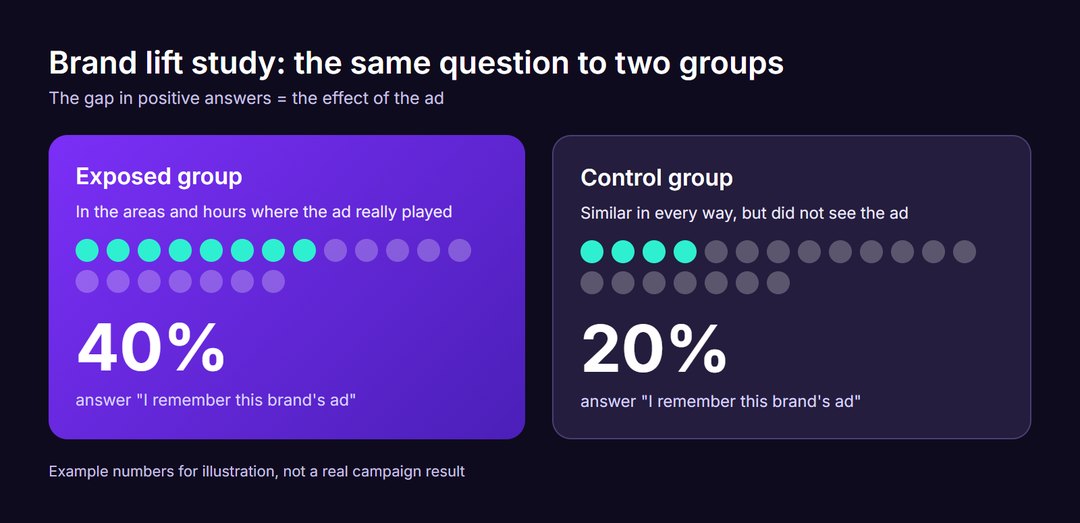
The core of a brand lift survey is comparison, not asking one group and reading a percentage. Some people already know the brand before the campaign, so without a comparison group you cannot tell whether positive answers come from this ad or from the brand’s existing reputation.
On online platforms the system already knows who saw the ad. Google’s help pages explain that the survey is shown both to people who saw the ad and to people who were eligible but did not, and the difference in answers measures the effect.
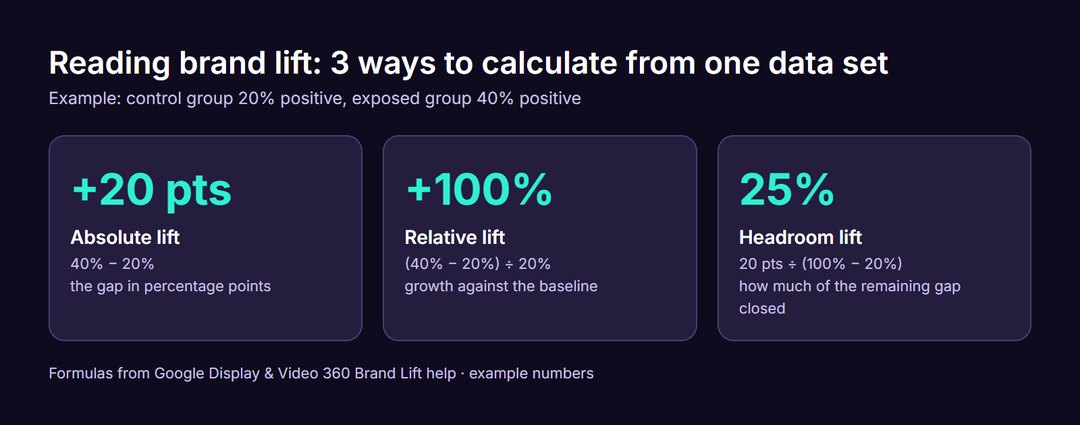
The same data can be read three ways. The example in Google Display & Video 360 Brand Lift help has a control group answering positively 20% of the time and an exposed group 40%.
Read absolute and relative together. A new brand with low baseline awareness often shows a very high relative lift even when the number of extra people who remember it is small, while a big brand that almost everyone already knows will find every figure harder to move.
The challenge out of home is knowing who saw the ad. A sign or screen does not know who passed by, so a study has to build the exposed group from the areas and hours where the ad really played, then find a control group from areas or hours without the ad, keeping the two as similar as possible.
For dooh bangkok, the advantage is that digital screens record where, when and how many times an ad played. That data defines the exposed group more precisely than estimating from traffic counts.
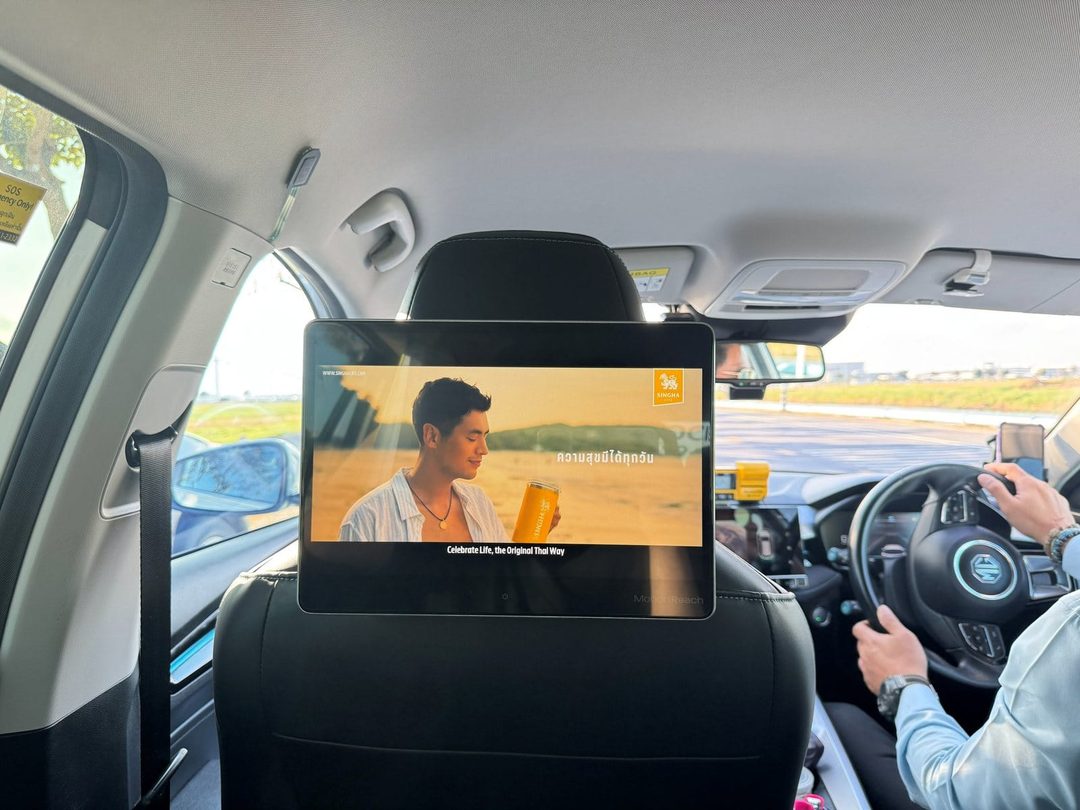
Take the Singha campaign, a singha taxi advertising case study that ran on 500 EV taxis from January to May 2026 (151 days). It generated 6.79 million verified impressions, reached 1.77 million unique passengers and showed each person the film an average of 3.83 times. Every play was logged at screen level with GPS and screen uptime data.
These are exposure figures, not brand lift results, because the campaign did not run a recall survey. But they are exactly the data a brand lift study needs: if a brand wants to know whether people who saw the ad remember it better, the areas, routes and hours where it really played can define who to survey. In taxi digital screen media, passengers sit in front of the screen for the whole ride, so frequency is a key variable to read alongside lift.
These steps need to be agreed while planning the media. If you only think about measurement after the campaign ends, there will be no baseline and no control group to compare with.
A measure of how much an ad makes people remember, know or consider a brand, by comparing survey answers from people who saw the ad with people who did not.
Impressions say how many times an ad had a chance to be seen; brand lift says whether the people who saw it remember or think about the brand more. Use them together, not one instead of the other.
Yes. Build the exposed group from the areas and hours where the ad really played, then compare it with a similar control group that did not see it. Digital media that logs every play makes the groups more precise.
Absolute lift is the gap in percentage points, for example 20% to 40% is plus 20 points. Relative lift is the gap against the baseline, so the same example is a 100% increase.
Want your next campaign to be measurable from day one? Get the MotionReach media kit and let the team plan routes, dayparts and the real play data you can build measurement on.
Sources: About Brand Lift – Google Ads Help and Understand your Brand Lift measurement data – Display & Video 360 Help (accessed 21 Oct 2026) · Singha campaign figures from the MotionReach case study page