

What is a billboard? A billboard is a large advertising sign placed along roads, expressways and landmarks so that many people see a brand again and again on their daily journeys. Today there are printed, digital, 3D and mobile billboards on vehicles, and the cost depends on location, size, duration and production.
Billboards are among the most familiar media in Thailand and remain a key part of a growing out-of-home market. According to MAAT (March 2026), Thailand’s Outdoor category, which covers billboards and roadside signs, reached ฿9,677 million in 2025, up 4.8% on the year before. This article explains the main billboard types, what drives the cost and how to choose a location that is worth the budget.
A billboard is a large outdoor advertising sign installed where many people or vehicles pass, such as main roads, expressways, intersections, shopping malls and business districts. It is the classic form of out of home advertising, or OOH. For the full picture of this media group, read what is OOH.
Billboards have three main strengths:
The limitation is that a traditional billboard stays in one place, reaches only the people who pass that spot and can only be measured by estimating passing traffic. Newer billboard formats were developed to solve these limits.
Billboards today fall into four main types, each suited to a different goal.
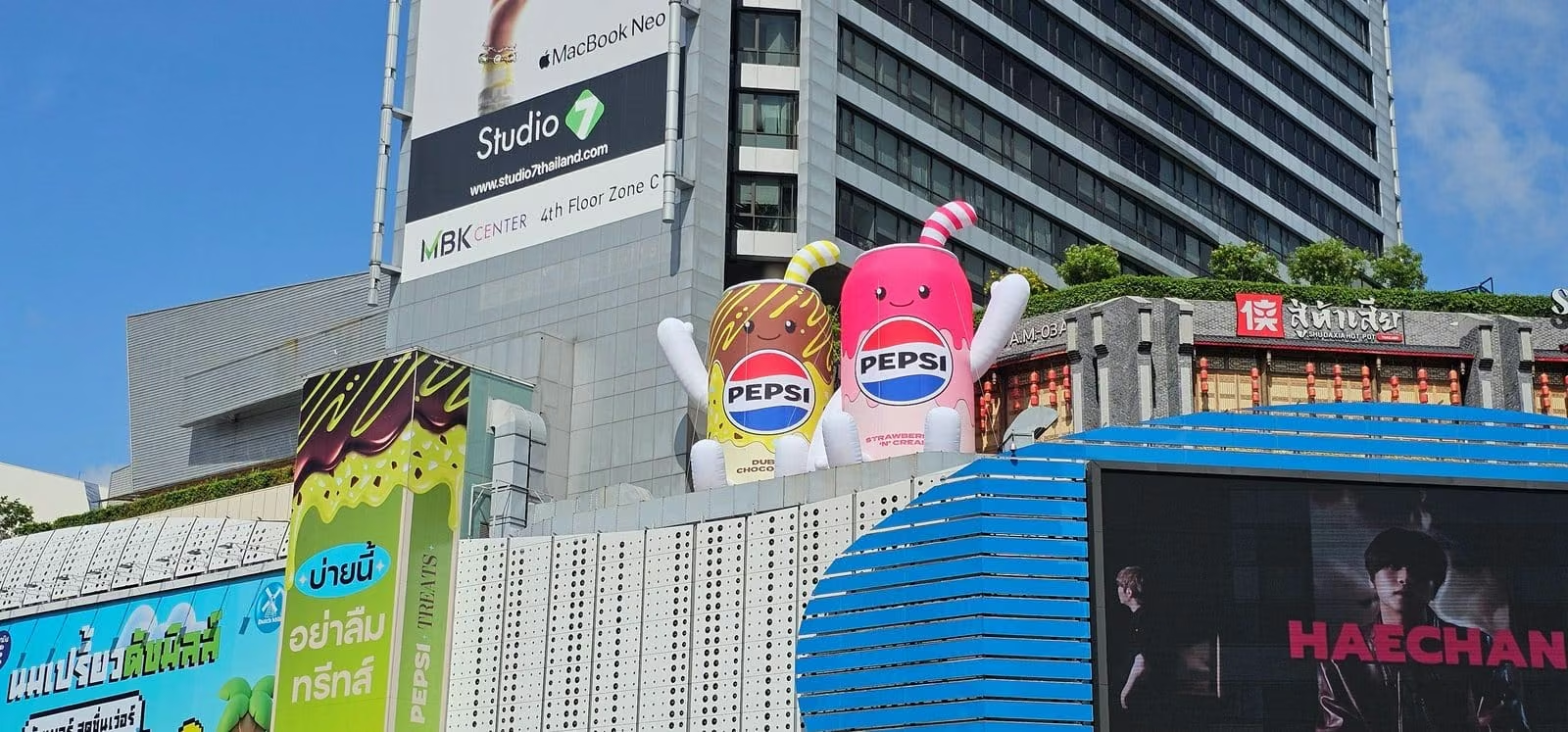
The artwork is printed on vinyl or another large material and mounted on a sign structure. It shows one image for the whole contract. Static billboards suit campaigns that want to own a location continuously with a message that does not need to change often, such as brand building or a product launch.
One example is Pepsi’s campaign at MBK Center, which combined billboards with a 7×15-metre inflatable for one month to launch two new flavours and delivered about 15M+ impressions (estimated), according to MotionReach’s Case Study Database (June 2026).
These signs display on LED screens, so creative can change instantly, play still images or video and be scheduled by time of day. Most share airtime with other brands in rotating slots. Digital billboards are part of DOOH, which made up 47.1% of global out-of-home spend in 2025 according to the WOO report (July 2026). See our dooh bangkok service for details.
These are LED screens with artwork designed so that objects appear to come out of the screen (anamorphic 3D). They make people stop, take photos and share. A well-known Bangkok example is LEO’s 3D leopard at Park Paragon in 2022, which was the work of that brand and its own team. 3D billboards suit campaigns that want social buzz more than repeated exposure.
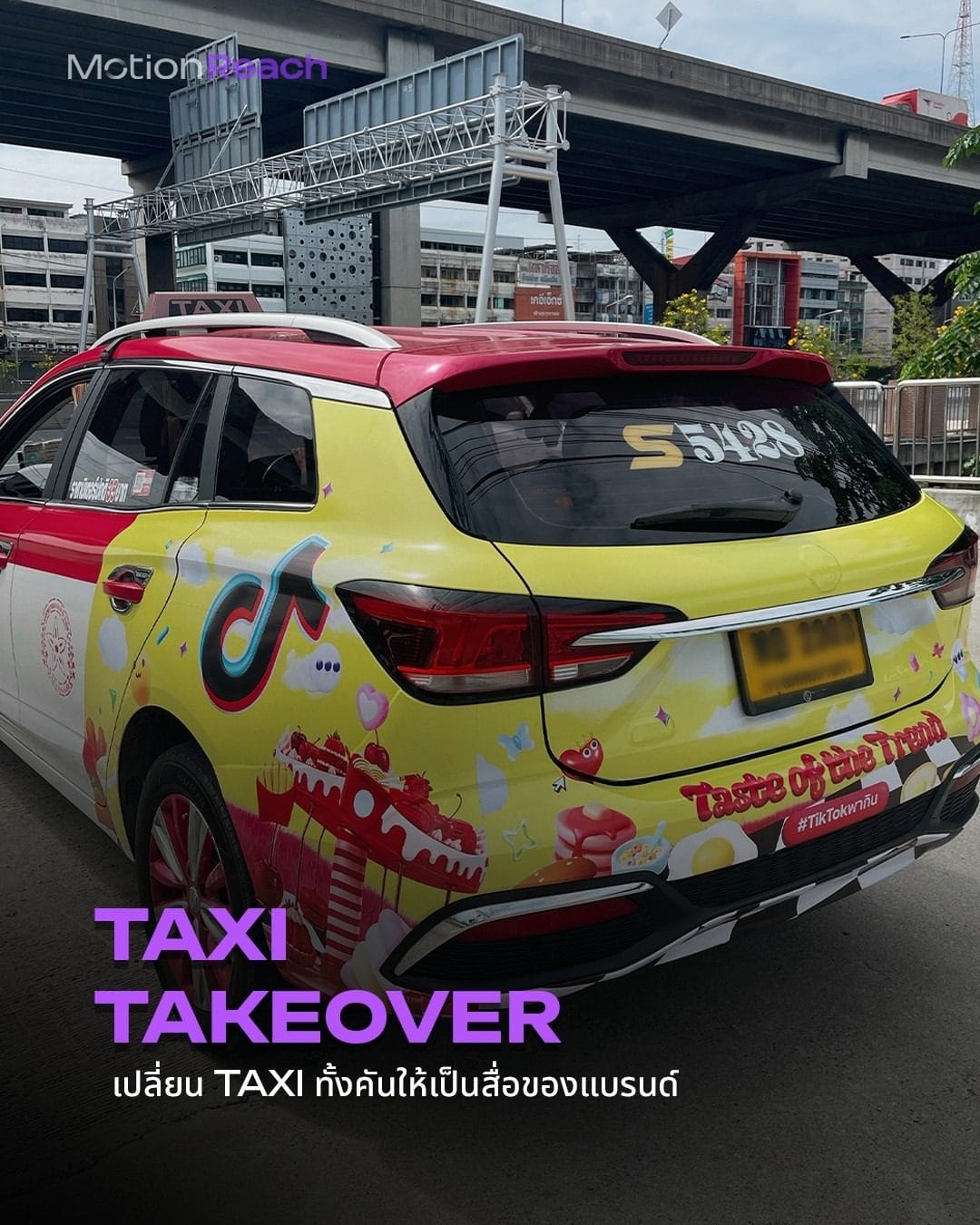
Instead of waiting for people to pass a sign, a mobile billboard takes the sign to people. The main formats are full or half taxi wraps, which turn the car into a sign that travels across the city, and car-top LED signs, which can change creative instantly and offer flexible campaign timing.
There is no single billboard price, because the cost depends on factors that differ from sign to sign. Before asking for a quote, it helps to understand the main components:
That is why prices seen elsewhere are hard to compare. The most accurate approach is to share your preferred location, duration and campaign goal, and let a media planning team propose options side by side.
Static and mobile billboards do not replace each other; they do different jobs. This table compares them.
| Factor | Static billboard (fixed sign) | Mobile billboard (vehicle wrap / car-top LED) |
|---|---|---|
| Reach | People who pass that location | People in many districts along the vehicle routes |
| Frequency | Very high for people who use the same route every day | Spread out, seen repeatedly across the city |
| Coverage flexibility | Fixed to the sign position | Expands with the number of vehicles and routes |
| Size and image | Large and prominent, a landmark | Close to eye level, in the middle of traffic |
| Changing creative | Needs reprinting and reinstalling (except digital screens) | Wraps are hard to change; car-top LED changes instantly |
| Best for | Owning key locations and long-term brand building | City-wide visibility during launches or festivals |
Many brands use both: static signs hold key locations while mobility ooh bangkok spreads visibility to other districts. Taxis can also add digital screens inside the cabin, so taxi advertising works outside as a billboard on the move and inside as a screen passengers watch for the whole ride.
Before renting a sign, check these five points:
MotionReach plans and sources media including billboards, roadside signs, expressway signs, LED screens and mobile media, so brands can choose the mix that fits their goals without dealing with many vendors themselves.
There is no fixed price. It depends on location, size, duration, production and installation, and whether the sign is printed or digital. The most accurate way to get a figure is to share the location and period you want and ask for quotes on several options.
Sizes vary by structure and location. Expressway signs, building signs and LED screens each have their own specifications, so ask for the size and artwork specs of the specific sign before designing your creative.
Large advertising signs fall under building-control law and signage tax, and some ad categories, such as food, medicine or cosmetics, may need approval from the relevant authority before they run. When renting an existing sign, ask whether its permits are complete and who is responsible for each step.
If you want to own a key location and build a long-term image, a static billboard fits better. If you want city-wide visibility or to reach several districts in a short period, vehicle media is more flexible, and many campaigns use both together.
Want to know the billboard cost for your preferred location? Ask MotionReach for a quote or get the Media Kit to see options for both static signs and mobile media.