

What is dayparting? It means scheduling ads to play only in the parts of the day, or the days of the week, when your audience is most likely to see them, instead of running the same ad around the clock. On DOOH (digital out-of-home) screens it is easy, because digital screens can change creative by time, while a printed board shows one image all day.
The person in a taxi at 8am and the one at 10pm are different people, so the message should differ too. This guide covers where the idea comes from, how to split the day in Bangkok, examples from abroad and a real campaign on MotionReach taxi screens, plus a checklist before you set a schedule.
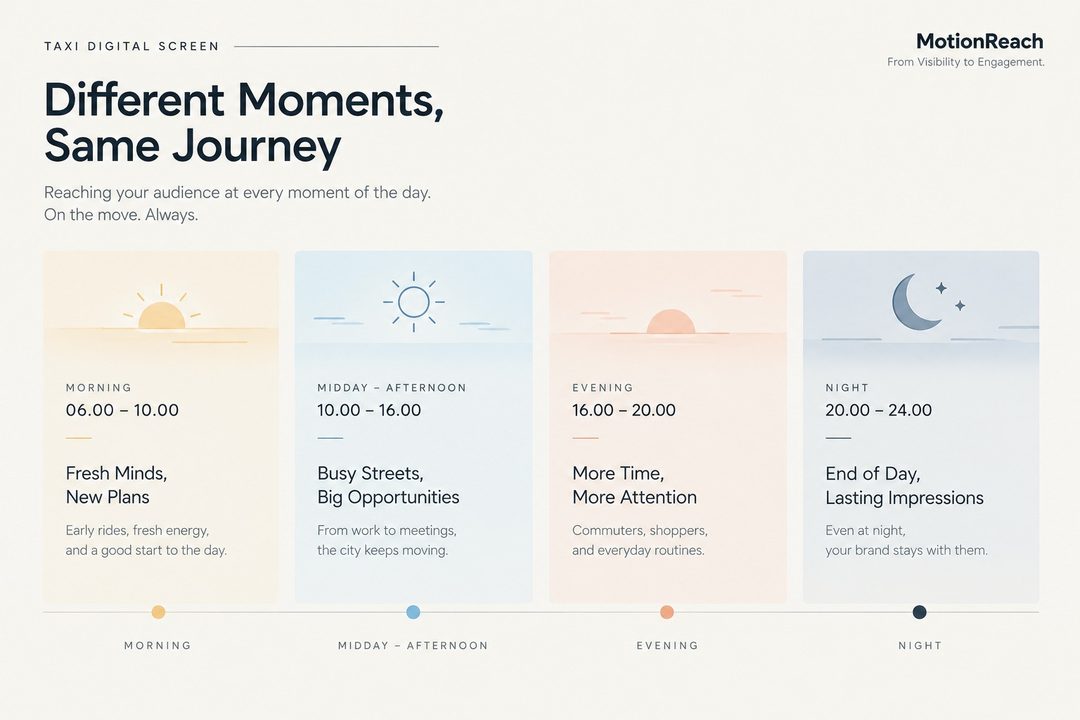
Dayparting, also called ad scheduling or time-of-day targeting, plans an ad schedule around time so ads run only when the audience is there, and budget is not spent on hours when it is not.
The idea comes from radio and TV, which sold airtime by the hours with the most listeners or viewers, such as cereal ads during Saturday-morning cartoons. It later moved into online advertising and DOOH.
Ad-tech company Perion splits the day into four simple parts: morning (6:00–12:00), afternoon (12:00–18:00), evening (18:00–24:00) and night (0:00–6:00), and notes that schedules can also follow days of the week, such as weekends only.
A static or vinyl board shows one image all day; changing it means sending a crew to re-post it. Digital screens receive files through a CMS, so you can set which creative plays at what time.
The brand no longer has to pick one message that is good enough for every hour; it can run the message that fits each part of the day best, such as coffee in the morning and dinner in the evening. For the difference between screens that sell scheduled airtime and a venue’s own screens, see what is digital signage.
Many programmatic buying platforms already include time options. The Vistar Media page for marketers says ads can adapt to location, weather and time of day, with a day-parting function to choose when an ad goes on screen.
There is no single formula. The dayparts below are a general starting point, not research on Bangkok behaviour.
| Daypart | What people are doing | Good fit for |
|---|---|---|
| Morning rush | Travelling to work or school | Coffee, breakfast, finance apps, services decided during the day |
| Lunch | Deciding what to eat | Restaurants, delivery apps, lunch promotions |
| Evening commute | Thinking about dinner, shopping or entertainment | Malls, supermarkets, streaming |
| Night | Going out or heading home late | Late-night food, drinks, ride-hailing |
In Malaysia, Perion describes a Samsung Galaxy A campaign on 50 programmatic DOOH screens that played its night-photography (Nightography) creative from 18:00 to 6:00 and other creative from 6:00 to 18:00, so the message matched what people saw around them at the time.
Taxi screens differ from fixed screens because the car moves around the city, so time always has to be planned together with area and route. In the morning a car may pass office districts; at night it may be around nightlife areas.
New York taxi-top screens have worked this way for years. In 2020 Digital Signage Today reported that Curb Taxi Media launched taxi-top screens with geotargeting, dayparting and weather triggers, and in October 2024 Billboard Insider reported that Screenverse had connected about 65% of New York’s digital taxi tops to programmatic buying, delivering geo-targeted and day-parted content at key moments of the day.
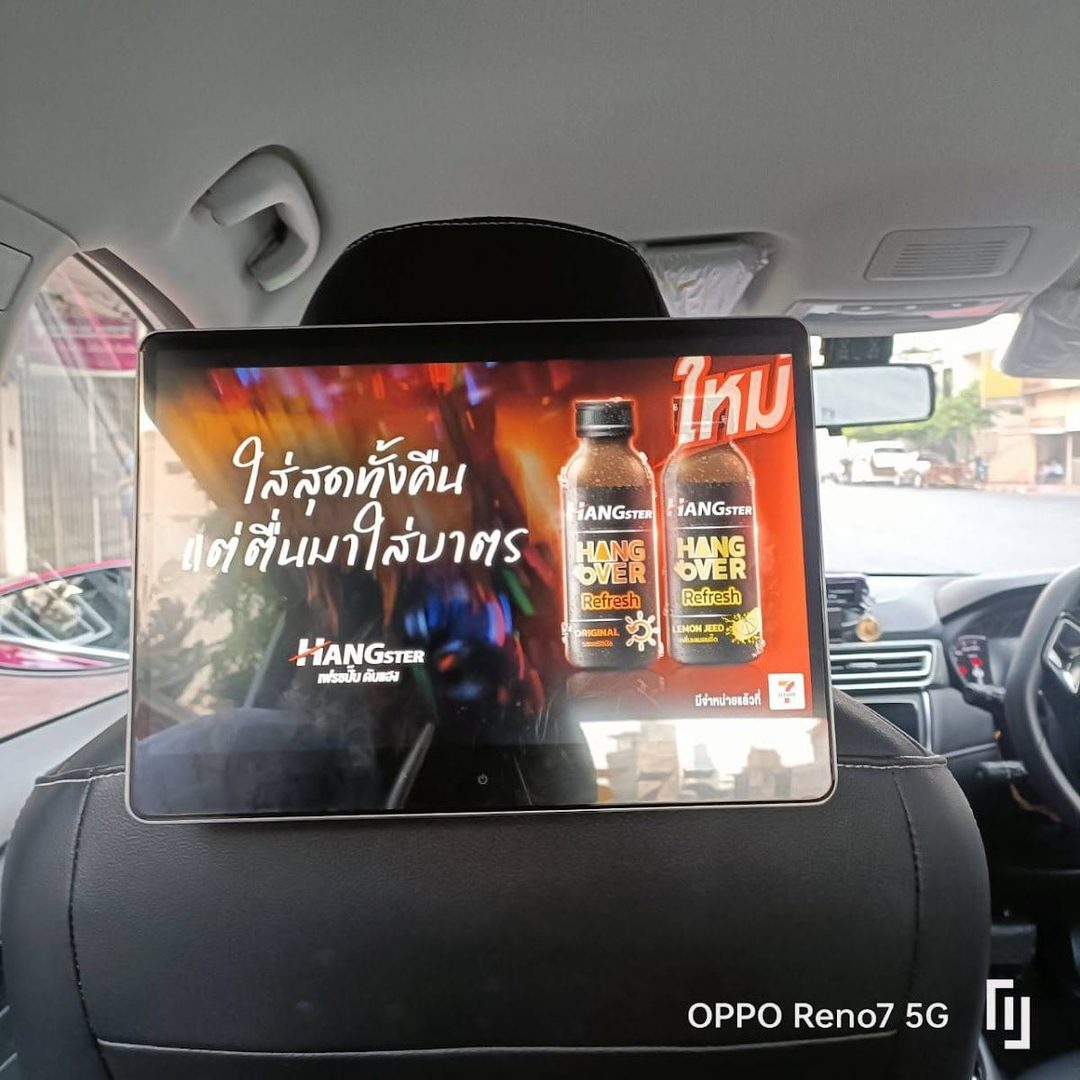
In Bangkok, a clear example is Osotspa’s Hangster campaign from January to May 2026 on MotionReach taxi advertising. The video creative was weighted to late-evening dayparts and nightlife routes, because a recovery drink means most to someone taking a taxi home after a night out. The osotspa hangster taxi advertising case study records 8.24 million verified impressions and 2.27 million unique passengers.
In-cabin EV taxi screens that passengers can tap or scan also let you plan beyond who sees the ad to what they do next at that moment. How finely each campaign can be scheduled is best agreed with the media team at the planning stage.
Dayparting does not start with the screen but with your customers’ day. Once you know the hours, choose dooh bangkok formats on those routes and write them into the media plan from the start.
Taxis, tuk-tuks, buses and boats move with people. Knowing which area a vehicle is in at which hour makes the message more relevant. See the out of home advertising formats in Bangkok that can be targeted by area and time.
People look at out-of-home ads for only a few seconds, and a message that fits the moment is easier to remember. Add a QR code per daypart to see when people respond, then reweight the hours in the next campaign.
It depends on how each media owner sells. Some sell by time slot, others by full-day package. The clearer benefit is that budget goes to the hours when your audience is actually there. Ask the media team how finely you can schedule and how it is priced.
Dayparting chooses the time; geofencing chooses the place, such as playing an ad when a vehicle is near a store or a set district. The two work well together, especially on moving media like taxis.
Yes. Many programmatic buying platforms already offer time-of-day and day-of-week settings, but each screen network supports them differently, so check with the media owner first.
OOH means out-of-home: advertising that reaches people while they are away from home, such as billboards, transit media and vehicle media. DOOH is the digital-screen part of out-of-home. Read more in what is ooh.
Want your ads on screen at the hours your audience is really on the road? Get the MotionReach media kit and let the team plan routes, dayparts, media and measurement with you.
Sources: Perion Glossary: Dayparting · Perion: Samsung Galaxy A · Breef (Feb 2026) · Billboard Insider (Oct 2024) · Digital Signage Today (Jan 2020) · Vistar Media · Hangster figures from the MotionReach case study page · daypart illustration by the MotionReach team