

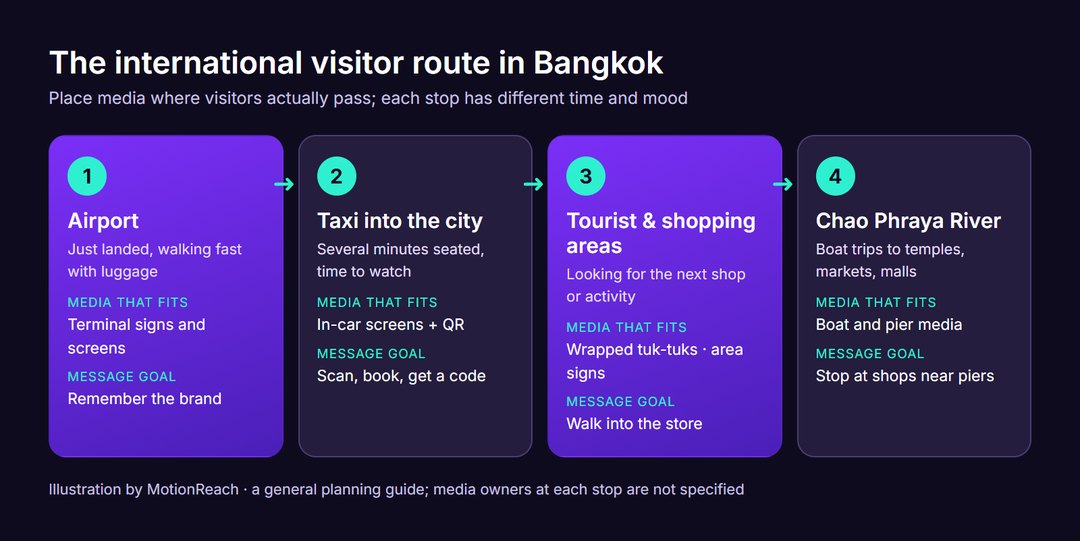
Tourism advertising that works in Bangkok during high season does not blanket the whole city. It follows the route international visitors actually take: the airport, the taxi into town, the tourist and shopping districts and the Chao Phraya River. The media that perform are the ones placed where visitors have time to look and a way to scan and act straight away.
High season, from late in the year into the new year, is close. Hotels, restaurants, clinics and tour operators that want international customers should start planning now. This guide, written from the media-planning side at MotionReach, covers where you meet visitors, what the message should say and how to measure it.
Most visitors are not standing still. Over a day they move through these points.
People are in a different frame of mind at each point, so the message should change too. Just after landing, the goal is to remember the name; inside a district, the goal is to walk into the store.
Visitor numbers are not growing the way they used to. On 8 April 2026 the Tourism Authority of Thailand revised its forecast to roughly 30–34 million international arrivals for the year, citing fluctuating travel demand, air-connectivity constraints, energy prices and the Middle East situation.
Most recently, on 16 October 2026, TAT reported 23.4 million international arrivals from 1 January to 30 September and forecast 33 million for the full year, with total tourism revenue of 2.65 trillion baht. Three points matter for brands.
In practice the city may not be as crowded as hoped, but the people who come can spend. Media has to reach them at the right point, in a language they understand.
Seen right after landing, so it suits brands that want to be remembered from the first step, such as SIM cards, travel apps or major malls. But people walk fast with luggage and have little time to look.
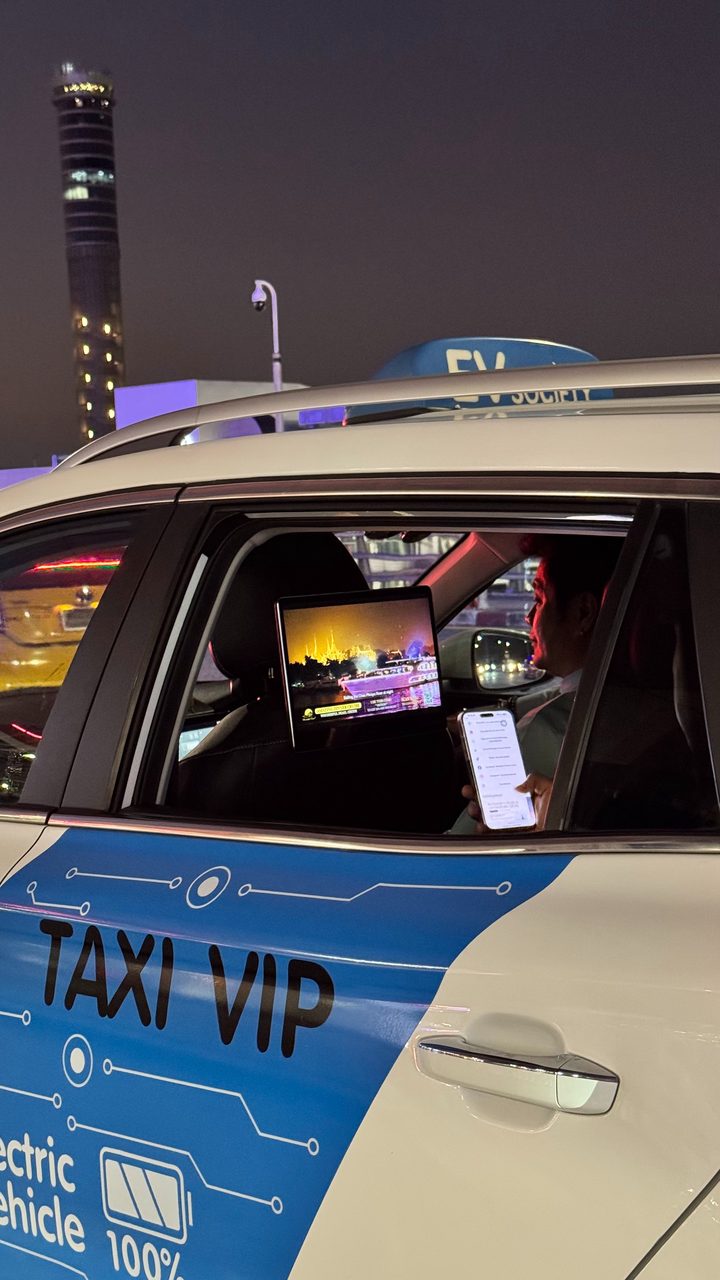
The ride from the airport to the hotel is when visitors have the most free time. An in-car screen they can tap and scan can send them to a map, a table booking or a discount code on the spot, and taxis move around the city all day. See the taxi advertising formats on the service page.
The tuk-tuk is a Bangkok icon. A wrapped vehicle passes through tourist districts and ends up in the photos people take, while wrapped taxis put the brand on many roads in a single day.
The Chao Phraya is the route visitors use to reach temples and riverside districts. People on a boat have time to look around, which suits restaurants, tours and shops near the piers.
Seen often on the way to the malls. Large signs help people remember a name, but if the sign is far away a QR code is hard to scan, so pair it with media within arm’s reach.
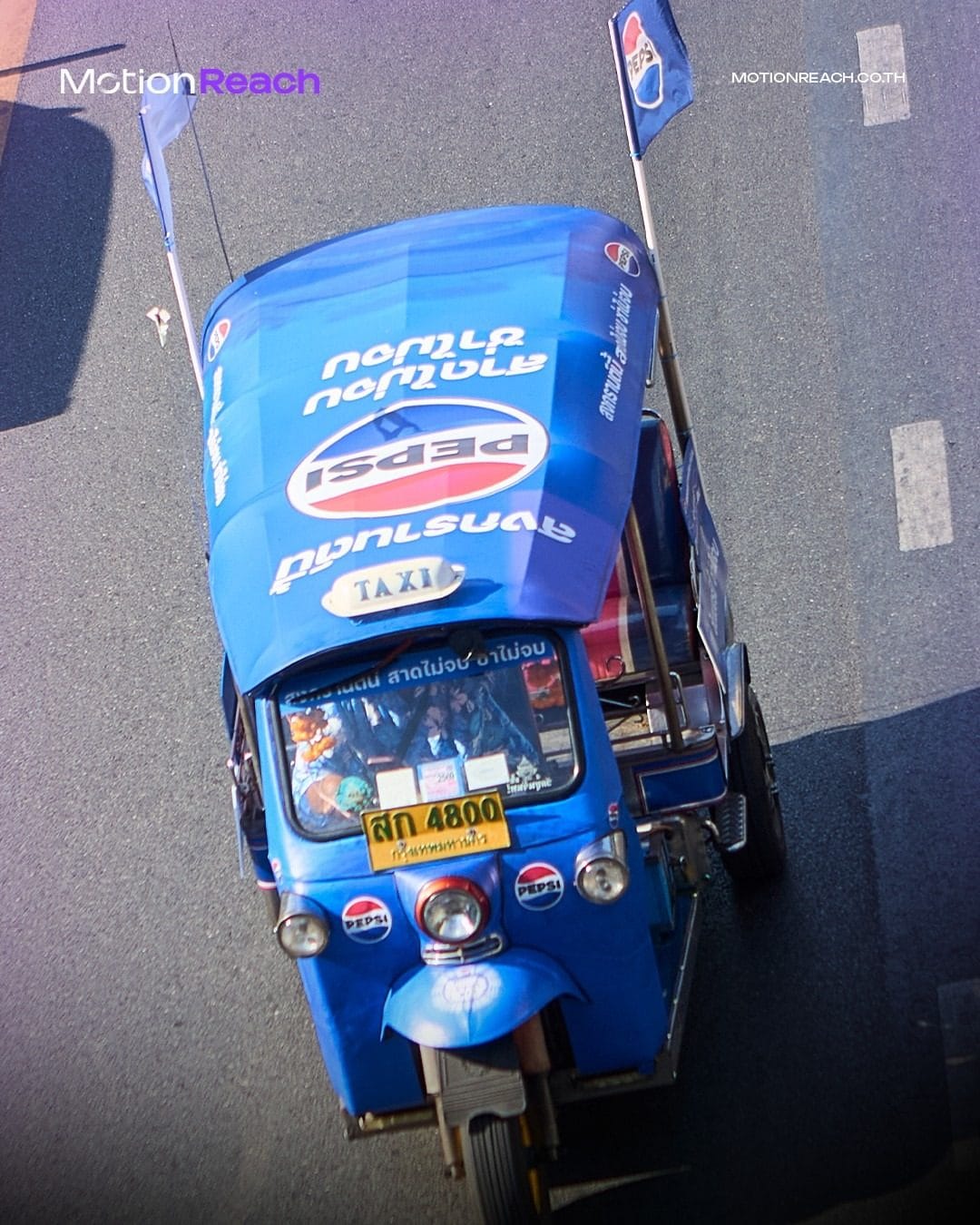
Songkran puts more people on the street than almost any other time of year, Thai residents and visitors alike. In Pepsi’s tuk tuk advertising bangkok campaign from 13 to 15 April 2026, MotionReach wrapped 20 tuk-tuks that gave free rides between CentralWorld and Silom, carrying 3,840 real passengers and generating an estimated 600,000 street-level impressions in three days.
The lesson is that media people can actually use on the move is remembered better than a sign that just stands there, and a countable passenger figure makes the result easy to report.
Visitors see a brand several times a day, from the airport to the river. Media placed as a connected route, such as billboard advertising bangkok along the airport road paired with in-taxi screens, works better than a heavy buy in one place. See the full range of out of home advertising formats in Bangkok on the service page.
Taxis, tuk-tuks, buses and boats go where people travel. If the screen can be scanned, people act straight away. For screens that can be targeted by area and time, see dooh bangkok.
Decide at the start what you will count, such as scans, code redemptions or website traffic, and compare with the period before the campaign. To learn whether people remember the brand better, read what is brand lift; to calculate return, read what is roi in marketing.
Start early. You need time for creative in several languages, QR landing pages and vehicle-wrap production. Ask the media team how far ahead the dates you want need to be booked.
Use a separate QR code or discount code per medium, then count scans, in-store code redemptions and website traffic. A good report separates three levels: delivery (did it run), exposure (how likely it was seen) and response (who did what next).
Start with English, then add the languages of your main markets, based on your real customers and TAT market data. The QR landing page should use the same language as the ad.
OOH stands for out-of-home: advertising that reaches people while they are away from home, such as billboards, transit media and vehicle media. Read the full guide in what is ooh.
Want your brand on the route international visitors really take this high season? Get the MotionReach media kit and let the team plan the route, media, multilingual creative and QR measurement with you.
Sources: TAT Newsroom (16 Oct 2026) · TAT Newsroom (8 Apr 2026) · Pepsi campaign figures from the MotionReach case study page · airport taxi photo and infographic by the MotionReach team