

Experiential marketing lets people touch, try or take part in a brand instead of only seeing an ad. In out-of-home media, it turns a site from a place to look at into a place to try something, from scratch-and-sniff billboards to taxi cabins with samples within reach.
When feeds can be skipped in a second, a physical experience is what people remember and retell. This article explains the four jobs of OOH, global examples with credits, and the Bangkok version that the MotionReach team builds on the street and inside vehicles.
It is the design of moments in which people use their senses with a brand: smell, taste, press, play or take a photo home. The goal is not logo recall alone but a feeling tied to the brand, which tends to lead to word of mouth and trial.
It is often confused with brand activation, which means activities that bring a brand to life in a physical space, such as booths, roadshows or sampling. Activation is one tool. The experiential approach is the wider idea that covers the activity, the media and the content that follows.
Three things set it apart from regular advertising: people must do something, they must get something back immediately, and the brand must be able to count what happened. We sum these up as ACT · REWARD · COUNT below.
The framework from the MotionReach talk “From Exposure to Experience” treats out of home advertising as a four-step ladder. The first two steps win attention; the last two win hearts. The examples below are all other brands’ work, not MotionReach’s.
| Job | Meaning | Example (year) | Credit |
|---|---|---|---|
| Exposure | Be seen | Apple “Shot on iPhone” (2015) | Photo: Josh Raab for TIME |
| Buzz | Be talked about | LEO 3D leopard at Park Paragon, Bangkok (2022) | Brand Buffet / LEO |
| Play | Invite participation | British Airways #lookup, London (2013) | British Airways / OgilvyOne |
| Experience | Let people try | Tower 28 “Summer of SOS”, New York (2026) | MilkMoney / Tower 28 |
Experience is where OOH differs most from online media, because smell, taste and touch cannot travel through a phone screen. These three cases are the work of the brands and agencies named, as reported by trade media.
The common lesson can be checked before any production starts:
To build this into a plan, see how the four questions SEE · FEEL · DO · LEARN shape a media plan before the brief is written.
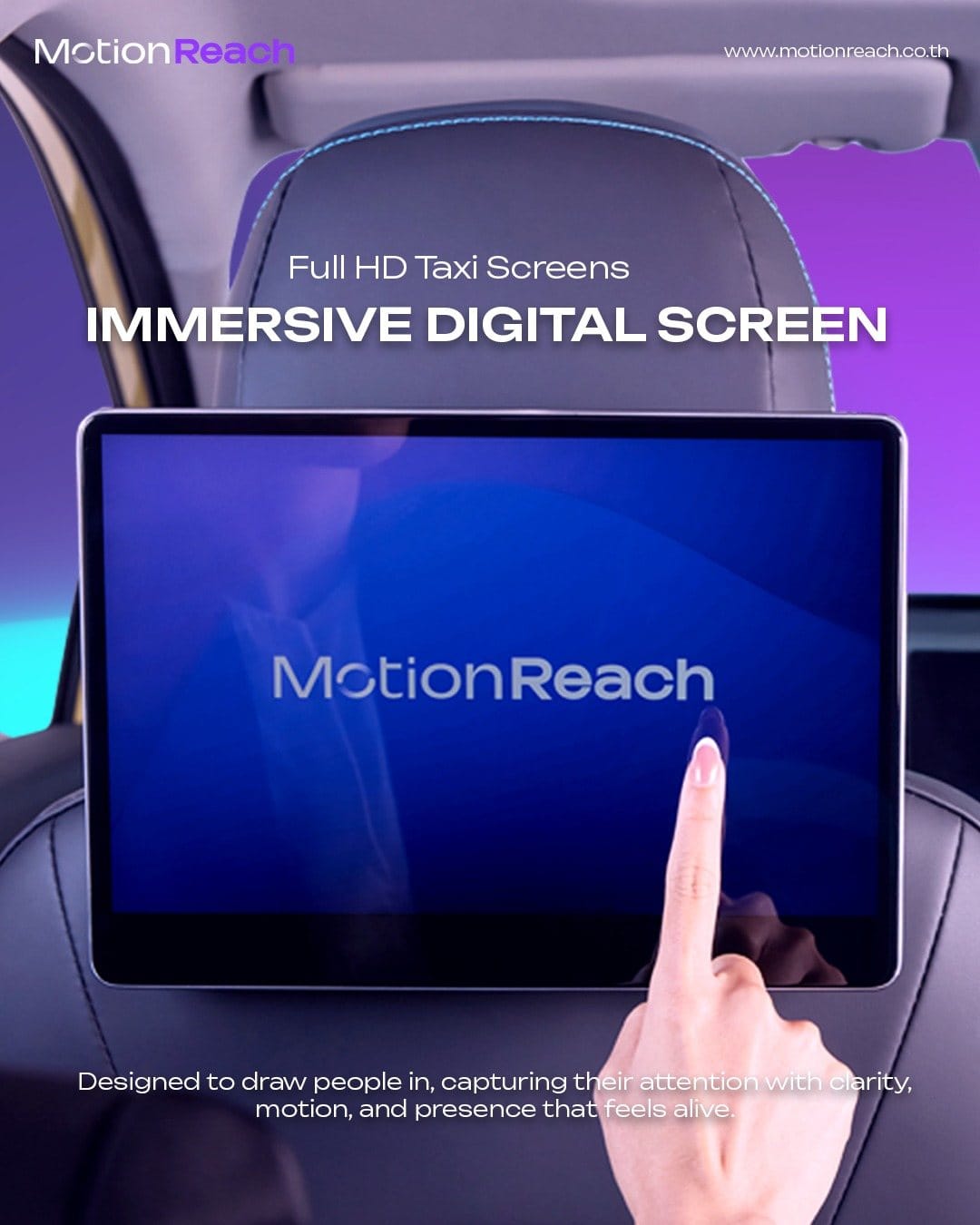
If a billboard can be tried, so can a car. A cabin has a seated audience within arm’s reach. The OTP Travel Demand Survey (Nov 2021–Mar 2022) puts the average taxi and Grab trip at about 28 minutes. That is travel time, not screen-viewing time, but it is long enough to tell a story and hand over a sample.
Experiential taxi advertising designed by MotionReach takes passengers through four beats:
This is ACT · REWARD · COUNT on the move. Passengers pick, try and scan, and the brand gets trial plus response data from the QR code, which connects to dooh bangkok on the same screen. Media and production costs are quoted separately, so brands add only what they need.
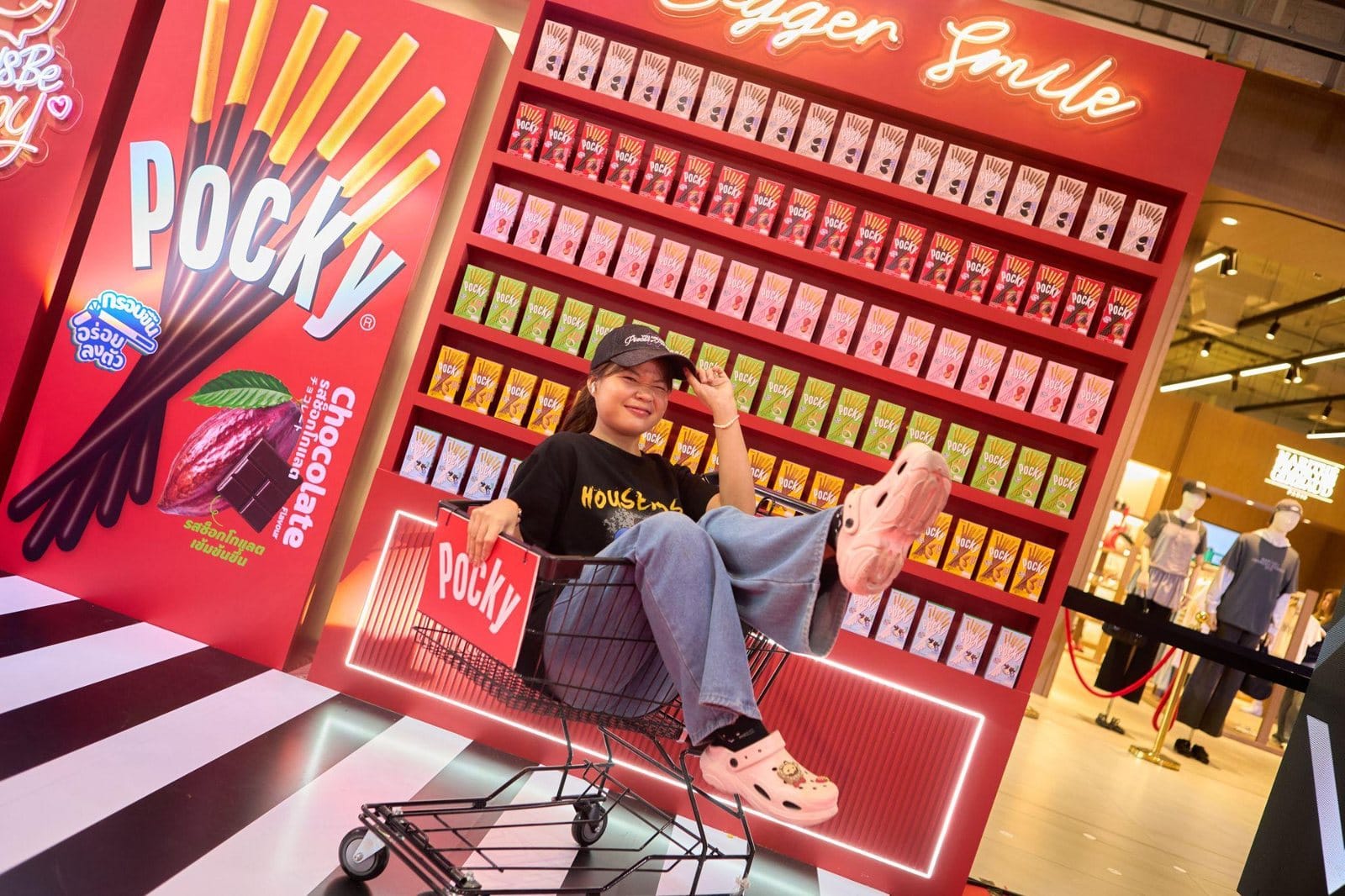
Off the street, the experience extends to events designed for people to try, play, photograph and share. One example is Pocky “Connect with a Smile”, a brand activation event bangkok by MotionReach with six concept booths, a theme song produced with TonHon, a live show by PERSES and social content built from the day.
The case study records more than 1,000 attendees, 9.3 million campaign views and 99% positive feedback. Note that 9.3 million is views, not people, which shows how an on-site experience can travel online far beyond the crowd in the room.
Another route is stunt media, such as the 7 × 15 m inflatable with a static billboard at MBK Center that launched two new Pepsi Treats flavours. It was estimated at more than 15 million impressions in one month (an estimate) and extended with KOL content. See the ooh advertising stunt bangkok case for details.
An event is one form of experience. The experiential approach is wider: billboards you can try, sampling in vehicles, product trials and the content that follows. The core is that people act and get something back immediately.
Set COUNT metrics before launch: participants, samples given, QR scans, views of follow-up content and satisfaction. If digital screens are involved, report plays, exposure and response separately so numbers do not mix.
Yes. Start with touchpoints you control, such as sampling in taxis on selected routes or a small booth with a QR offer, then scale once results show.
Images and videos of other brands’ campaigns belong to those brands or agencies. Link to the original source with credit, or create new illustrations to explain the idea.
Want customers to try your product on the move? Design a brand experience on the street and inside vehicles with MotionReach.
Global case sources: Modern Retail · RetailBoss · Marketech APAC. Examples in the table are the work and copyright of the brands and agencies named.